
What Information Does a CNC Machining Company Need to Provide a Quote?
You have a component that needs manufacturing, so the next step is to send it out for quotation. But what does a CNC machining company need from you?
A technical drawing is a good starting point, but it is rarely the only information required. Material, quantity, tolerances and delivery expectations can all affect how the component is produced and how much it will cost.
Providing the right details at the beginning helps the machinist understand the job properly and prepare an accurate quotation. It can also uncover opportunities to make the component easier or more cost-effective to manufacture.
A technical drawing or CAD file
Ideally, your enquiry should include a technical drawing showing the component’s dimensions and features. This gives the machinist a clear picture of the part and highlights important details such as threads, holes, grooves and surface finishes.
A CAD file can provide additional information, particularly for components with more complex geometry. If you have both a drawing and a CAD file, it is helpful to send both.
Check that the revision number is clearly marked, especially if the design has changed during development. Manufacturing from an outdated drawing is an expensive mistake for everyone involved.
Can you request a CNC machining quote without a drawing?
Yes, in many cases you can.
At Bon Precision Engineering, we can discuss components based on an existing sample, specification or clear description. This can be useful when replacing an obsolete part or reproducing something for which the original drawings are no longer available.
The sample may need to be measured and reviewed before a firm quotation can be prepared. It is also important to explain how the component is used, as this can help identify which dimensions and features are critical.
A quick conversation is often the best place to start.
The required material
Your enquiry should state which material the component needs to be made from. Bon Precision Engineering regularly machines stainless steel, brass, aluminium, mild steel and engineering plastics.
If the exact grade is important, include it in the specification. For example, 303 and 316 stainless steel have different properties and are suited to different environments.
If you are unsure which material to choose, tell us what the component needs to do. Useful information for a CNC machining quote includes:
- Where the component will be used
- The loads or pressures it may face
- Its exposure to moisture, chemicals or heat
- Any weight restrictions
- The required appearance or finish
We can then discuss the practical options with you before quoting.
The number of components required
Quantity has a significant effect on the cost of CNC turned components.
Every new job requires an element of preparation. The machine needs to be programmed, tooling selected and the first component checked carefully. These setup costs are spread across the production run, so the price per component will usually reduce as quantities increase.
Try to provide a realistic quantity rather than asking for a general price. If you are considering several batch sizes, ask for separate prices. For example, you might request costs for 100, 500 and 1,000 components.
It is also worth mentioning if the job is likely to become a repeat order. Scheduled production runs may be approached differently from a one-off batch.
Tolerances and critical dimensions
Tolerances state how much a finished dimension is allowed to vary from the measurement shown on the drawing.
Some components genuinely need extremely tight tolerances. Others have been given tight tolerances by default, even though a little more variation would make no difference to their performance.
Tighter tolerances can require additional machining time, inspection and specialist tooling. This may increase the cost of production.
Mark any critical dimensions clearly and explain which features affect the component’s fit or function. If every measurement is given the tightest possible tolerance, the component could cost more than it needs to.
Threads, finishes and additional processes
Include details of any internal or external threads, special finishes or secondary processes required.
These may include:
- Deburring
- Polishing
- Plating
- Heat treatment
- Anodising
- Passivation
- Part marking
If a particular finish is needed for appearance, corrosion resistance or performance, explain this in the enquiry. Photographs can also be helpful when matching an existing component.
Your required delivery date
Let the machining company know when you need the components.
An honest delivery date makes it easier to plan the work and confirm what is achievable. If the job is urgent, say so at the start. There may be options for prioritising production, depending on current machine capacity, material availability and the complexity of the component.
For repeat orders, providing a rough forecast can help with future production planning and material purchasing.
How will the component be used?
A little background can be surprisingly useful.
You do not need to share confidential details about the entire project. A brief explanation of the component’s purpose can help the machinist understand why certain features, materials or tolerances matter.
It may also reveal a more practical way to manufacture the part. Small design changes can sometimes reduce machining time, avoid unnecessary tooling or improve consistency without affecting the component’s performance.
Requesting a quote from Bon Precision Engineering
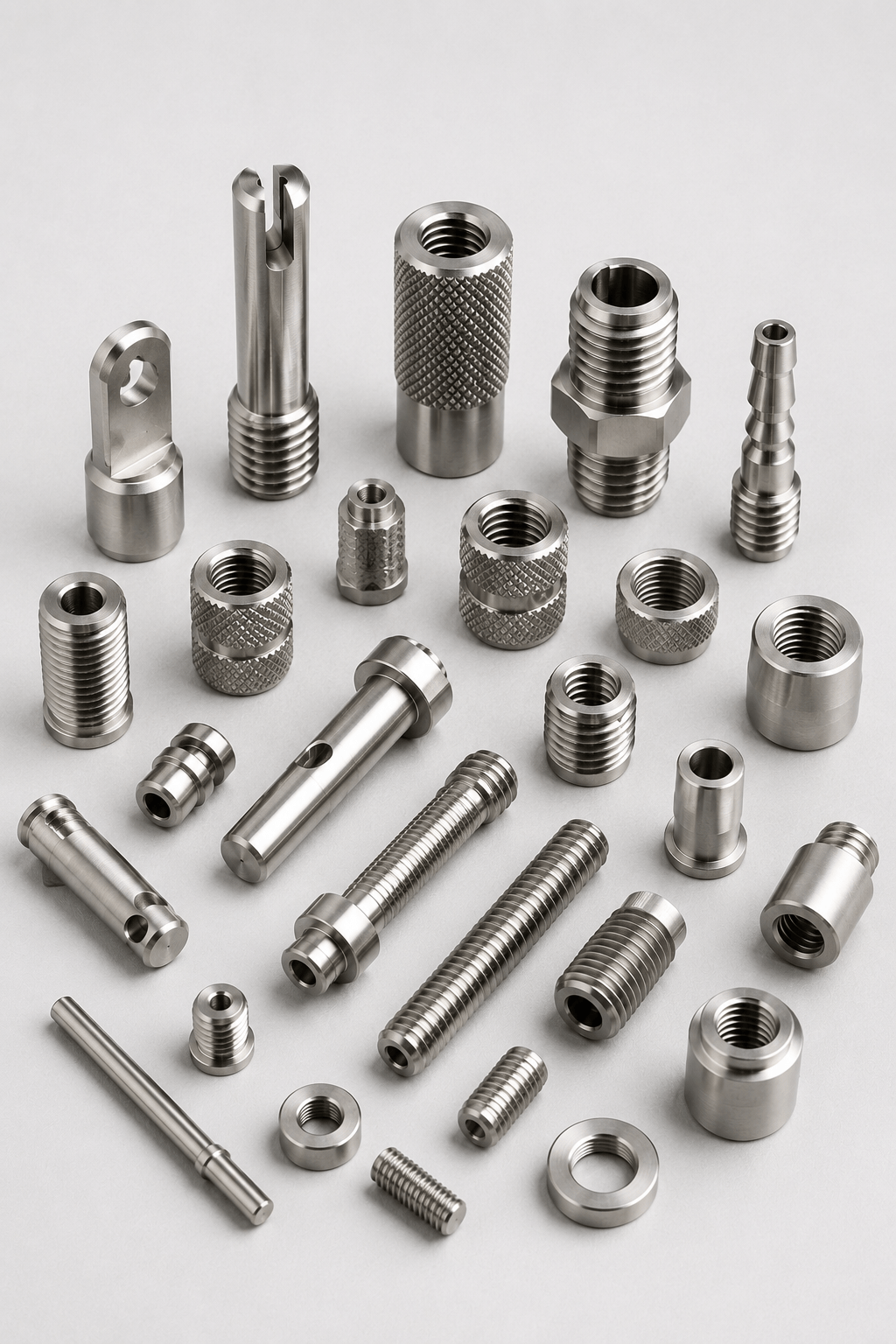
Bon Precision Engineering manufactures bespoke CNC turned components from 1mm to 26mm in diameter, including threaded inserts, dowel pins, clevis pins, spacers, bushes and custom fasteners.
To request a quotation, send us as much of the following as you have available:
- A technical drawing, CAD file or sample
- Material and grade
- Required quantity
- Critical tolerances
- Threads and finishing requirements
- Target delivery date
- A brief explanation of the application
Do not worry if you do not have every detail. Send us what you have, and we can talk through the rest.
Contact Bon Precision Engineering to discuss your component or request a CNC machining quotation

